Creative fieldwork solutions: Shifting the paradigm

This article describes the creative methods used by the Cincinnati State Technical and Community College OTA Program to provide Level I and Level II fieldwork rotations that are meaningful and give students the real life, hands-on practice they need to be successful in the workforce. This description is provided to start faculty thinking outside of traditional methods to develop partnerships with stakeholders in their local communities.
The pandemic turned our world upside down with little warning. When the shut-down began closing or severely curtailing businesses, there was a need to shift the paradigm of our fieldwork models to something never attempted so quickly before. Our medical model partners included community hospitals, nursing homes, outpatient clinics, and schools to provide our students with an enriching fieldwork experience. However, the fieldwork educators at our locations were no longer able to allow students an opportunity for fieldwork rotations to continue as scheduled, despite the upfront planning and preparations that were made well in advance. Reservations were cancelled by the day and sometimes even by the hour. How could we continue to provide fieldwork experiences while meeting the Accreditation Council for Occupational Therapy Education [ACOTE®] standards (2018) and giving occupational therapy students the enriching experiences they need to apply skills and develop clinical reasoning to real people, groups, and populations?
Meeting ACOTE Standards
During these unprecedented fieldwork experiences, we used emerging areas of practice and community-based settings to give our students in-person fieldwork opportunities. Because we happened to be working on our ACOTE self-study, we found that this project tied into and aligned with many ACOTE standards.

Community Standards
As the saying goes, “It’s not what you know, it’s who you know.” This statement became very real while we were figuring out how to handle the upheaval created by the COVID-19 pandemic. The process started with identifying the community partners/external stakeholders who may have a need that could be addressed. One of the initial rotations affected was Level I Pediatric fieldwork. The faculty collectively decided that virtual fieldwork and simulation was not going to be the best option for our students, who are hands-on learners. Our relationships with local recreational community centers through the Cincinnati Recreation Commission (CRC) provided an opening to offer them help and hope as they became ground zero for the public schools converting to remote learning. CRC has more than 23 centers and at the time had 275 children enrolled in their School Enrichment Program. For parents to continue working they needed a place to take their children who were learning virtually, because childcare and early learning centers were closed. The local community centers attempted to close the gap for children, parents, and schools. Each of the 23 CRC community centers hire recreational specialists who have skill sets to provide activities and entertain children. The centers and recreational specialists had difficulty assisting the children with executing a successful school day in the remote world. Frustrations were coming from students, parents, teachers, and community center staff, with no end in sight. In casual conversation between the academic fieldwork coordinator (AFWC) and upper management at CRC, it was discovered that OTA students could be a huge asset for staff and children and could assist with meeting the virtual learning needs the schools required. This decreased frustration that the children at the center and staff were experiencing, while meeting our students’ needs in completing a pediatric Level I fieldwork rotation. An articulation agreement was already in place, so students started their rotations without delay. The students completed 7 weeks for 8 hours per week under the supervision of the AFWC and center directors. Twenty-one students were spread across five locations that were identified as having the greatest need.
Similarly, our Level I mental health fieldwork rotation the next semester proved to be another challenge. Our OTA program’s curriculum model is designed to have the entire cohort complete their Level I mental health rotation at the state’s psychiatric hospital locally in Cincinnati. Students are typically supervised by staff OTs and OTAs, and a group model approach is used for intervention and learning. This rotation, due to the pandemic, was cancelled 6 months in advance, which gave us time to develop a Plan B. Connections were key. Our program and the AFWC have many connections in the mental health community, which enabled meetings with different stakeholders to promote our services. During these meetings, evidence and valuable information was provided to show OT’s roots in mental health, the efficacy of services provided through OT, the role of the student, and how supervision would be provided by the AFWC so that no added pressure would be put on the facility. A week-by-week progression of how the student would implement OT services and interventions, how the student would interact with clients, and benefits of OT services directed at the specific clientele the facility serviced, were also presented to stakeholders. Through these meetings it was discovered that the OT profession as a whole is still confusing to the public, and advocacy for our profession was needed to establish our role and develop long-term placement of OT services within the community settings. Partnerships were formed with five local community-based settings that offered mental health services and addiction services, but that did not contain OT services for the low-income clients they serve. This included homeless shelters for both men and women in which some people utilizing the services lacked social and leisure participation. Articulation agreements were signed, and students were able to begin their Level I mental health fieldwork rotations again without delay.
Programming
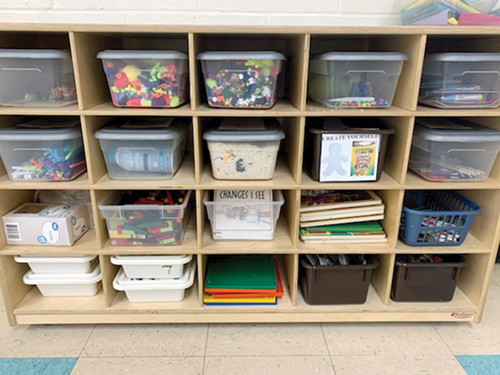
Prior to each rotation, a seminar meeting was used to prepare the students for the environment and those populations they would be serving. It was crucial that students understood the needs and the uniqueness of the clients so interventions stayed client-centered and occupation-based. For example, after speaking with staff at the shelter, it was decided that this population would benefit from interventions on improving communication skills for interviews, exploring leisure activity, team building, and making healthy dietary choices. Students were also educated using articles, videos, and discussions to decrease fear and biases that may have existed around low-income populations. ADA and mental health were discussed in preparation for their start. Each fieldwork rotation was conducted over 7 consecutive weeks, 2 times per week, for 4 hours each day. The first week, students observed the AFWC and faculty running groups and included socializing with clients and staff. Students were required during week one to conduct a needs assessment by interviewing staff and having clients complete a survey on programming at the facility, as well as what clients needed from their therapeutic interventions. The weeks in between included having the students work to organize their groups using a lesson plan format and conduct two groups for each day they attended, over 5 weeks. Students were assigned partners (groups of two), and each group was required to use Group Dynamics is Occupational Therapy (Cole, 2017) as a guide for lesson planning and implementation. Students completed a written lesson plan and wrote group goals using a group leadership form, each of which included a description of interventions, materials needed, and environment set up. Students were also required to include process questions, generalized questions, and applications to be discussed with clients after groups met to increase understanding and peer interaction using a lesson plan. This form was turned into the AFWC a week prior for feedback to ensure all topics were covered and appropriate for the clients’ needs. Students were also required to have group rules and share those with clients as well as group goals prior to running each group. Each group lasted 45 minutes (set up and clean up were not included in that time), and two to three groups were conducted each day. After groups concluded for the day, students were encouraged to give group leaders feedback on what went well, what they would change, and observations of clients’ behaviors and performance during the group session. The last week consisted of a wrap up with clients and facility staff. Education and materials were provided, and staff were educated so they could continue to provide resources after the students left.

Final Results
Through this project, our community partners were able to see our value and identify us as the missing piece to the puzzle and the link to close the gap in services at their locations. At both CRC and the community mental health facilities, students and the OTA program staff received rave reviews from clients and staff. CRC requested Level II fieldwork students be sent to their facilities for their summer program. In 2021, four Level II students went, and it was a tremendous success. A continuation of services for Level I students was established for years to come, and one student landed a part-time position at one of the mental health locations. The homeless shelter begged the OTA students to stay and asked for year-round services. That began the discussion of how to hire staff OTs and OTAs. The AFWC is currently assisting the homeless shelter with a full-time position for an OTA and a part-time position for an OT to supervise those services.
Although we were blindsided at the beginning of the pandemic and needed to do something nontraditional with our fieldwork formats, our program benefited and will be forever changed from this experience. We now have strong relationships with these community partners. Each facility was able to see the good work our students and OT practitioners could do for the clients they serve. We plan to keep all these facilities in our rotation of fieldwork sites. With the diverse options of sites, we will be able to equip our students with the necessary skills to treat any person, group, or population without bias. These new opportunities for our program also provide our students with the chance to implement interventions in nontraditional settings, many of which provide services for clients with problematic social determinants of health, economic disparities, and lack of access to resources. Year after year, we will have the opportunity to show our students what client-centered approach truly means in the occupational therapy community.
Conclusion
What began as a temporary fix turned out to become a standard of practice for our fieldwork program at Cincinnati State College, and truly ended up as a positive outcome for everyone involved. This opportunity has shown our students how to use their skills and training in a nontraditional setting and to advocate for occupational therapy in the local community. By building relationships with local community organizations, we have been able to grow and develop employment opportunities in a way that will create positive change in the Cincinnati area for those in need of the OT services. Future work still needs to be done. We hope to expand our relationships with these community organizations to increase the role that OT can make for them by encouraging ongoing provision of the OT services even after we have completed those fieldwork rotations. Networks in our local communities can provide great learning experiences and should be cultivated!
References
Accreditation Council for Occupational Therapy Education. (2018). 2018 Accreditation Council for Occupational Therapy Education (ACOTE®) Standards and interpretive guide (effective July 31, 2020). American Journal of Occupational Therapy, 72(Suppl. 2), 7212410005. https://doi.org/10.5014/ajot.2018.72S217
Cole, M. B. (2017). Group dynamics in occupational therapy (5th ed.). Slack.
Antoinette Durban, BS, COTA/L, is the Academic Fieldwork Coordinator for the Cincinnati State Occupational Therapy Assistant Program.
Claudia Miller, OTD, OTR/L, is the Program Chair for the Cincinnati State Occupational Therapy Program.