OT Stories
This April and all year long, we celebrate occupational therapy practitioners and the power of occupational therapy.
Read these inspiring occupational therapy stories submitted by your fellow colleagues and those inspired by the occupational therapy community.
*AOTA is not responsible for the content of these stories and sharing them does not imply endorsement of any products or services that may be mentioned.
-
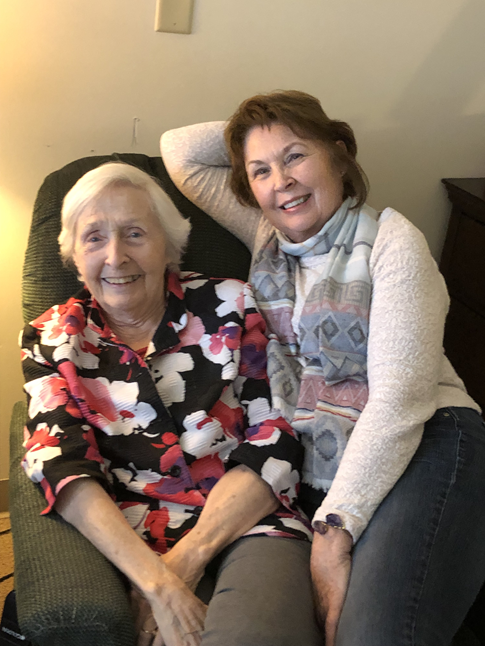
Submitted by Judy M. Romano, MS, OT/LOccupational therapy has been an integral part of my adult and professional life. My career has been focused on adults at home, inpatient, outpatient, acute and short term rehab. Working with adults and caregivers in their actual home setting made sense to me so I designed an older driver evaluation service, Driving Solutions, on that model. When COVID came along I saw the need for virtual caregiver training. Now I call myself The Informed Caregiver, which is the name of the website I created. The website hosts a virtual caregiver training program called The Caregiver Success System - The essential training that every family caregiver needs. That training is designed for new family caregivers, and for any student entering geriatrics. The training system is focused on supporting caregivers who are increasingly tasked with performing complex medically-based care routines they have never been trained for. The Caregiver Success System training is an amazing resource for OT students entering adult rehab and geriatric field work settings. It's curious to me that insurance only recently began including coverage for caregiver training. Throughout my career I made a point of including the caregiver in every OT treatment session especially when the patient had cognitive deficits.
-
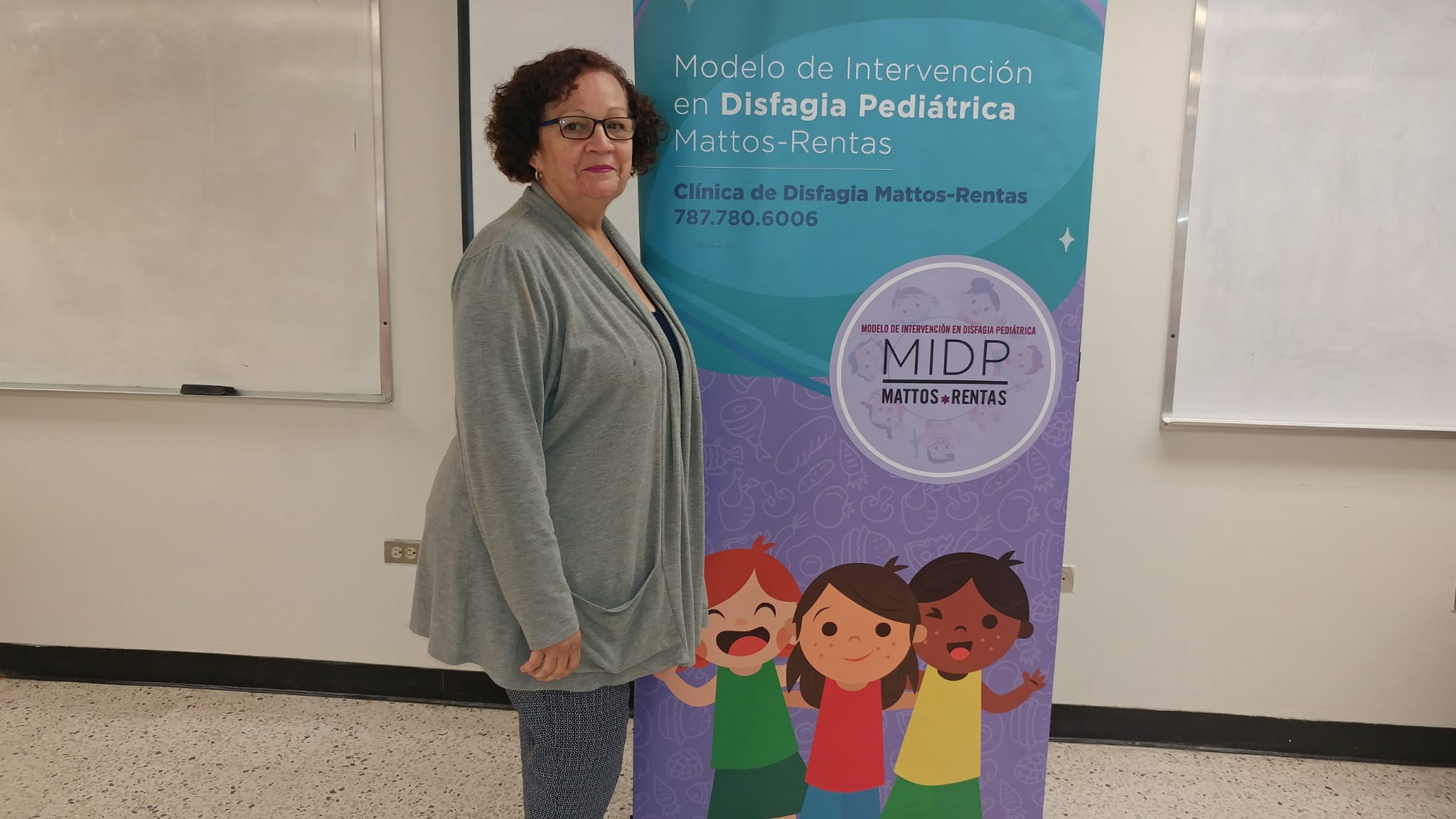
Submitted by Yadira Rentas, OTR/LGraduated in 1971 (was 19 yrs old). Passed the registry test with the third best score. Started working in pediatrics and still working. Co-author of a Pediatric Dysphagia intervention model. Co-author of Autism intervention Model (MIIA) used at public schools in PR. I could not have been anything else than a pediatric OT. Still love my work. Still love my patients.
-
Submitted by Susanne Giannitti, OTR/LApril is Occupational Therapy Month, so it feels like the perfect time to publicly declare I hit the jackpot when I married my wife, Sue.
We met in our 50s, and two years later, we tied the knot. I was an insurance agent, and I thought I knew a thing or two about occupational therapy—mostly from workers' compensation cases. Turns out, I had no clue.
Sue was delightfully quirky. She had an uncanny ability to spot a sock aid at a thrift store from 50 feet away. Our home became a jungle of plants, crafts, adaptive gadgets, and enough durable medical equipment to outfit a small rehab center. Our front porch? A rotating exhibit of her bargain-hunting treasures—so picture-worthy that strangers actually stopped to take photos. And then, of course, there was Pandemic Pete, born during Covid, a six-foot boxing dummy she dressed up for every season. Delivery drivers either loved him or were deeply unsettled.
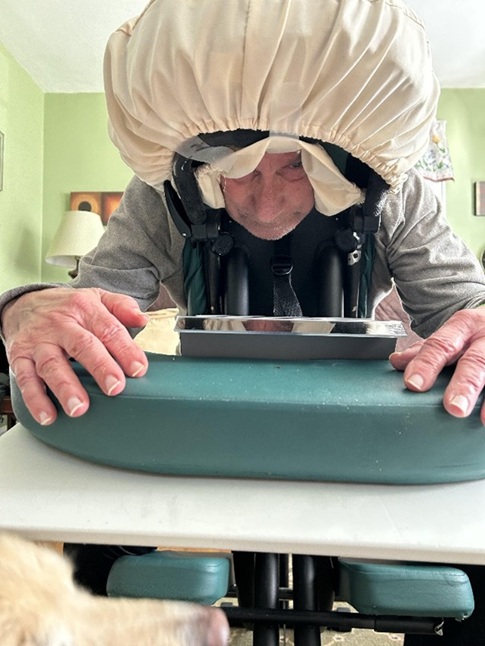
One day unfortunately, I came home blind in my "good" eye. My retina was detached. Emergency surgery followed. It failed. A second, more invasive surgery was needed. My post-op instructions? Face down, at all times for at least 2 weeks. No reading. Ten eye drops a day from three different bottles. No water in the eye. Oh, and prednisone, which turned me into a bottomless pit of hunger.
The nurse handed Sue an eye shield and some tape—no detailed instructions, just a brochure for a chair that cost about as much as a small car.
That’s when I realized: I was married to the MacGyver of occupational therapy.
She built a prone-positioning setup out of a travel pillow and foam wedges she had mysteriously collected over time. (I dared not ask why she had so many.) When I grumbled that I couldn’t swallow properly, she assured me: “Dysphagic patients do it all the time.” “What’s dysphagia?” I muttered. “Exactly,” she said.
When the tape wouldn’t keep my eye shield on, she crafted a padded one and secured it with a headband (patent pending). When I begged for coffee but couldn’t see well enough to pour, she gave me a mug that was white on the inside so I wouldn’t flood the kitchen. She acquired an endless supply of different straws knowing they would be needed post-op. When I wanted to watch TV, she rigged up a mirror system. I asked how she knew how to do that. “I saw in an OT book, a picture of a guy in an iron lung reading,” she shrugged. “It’s like a periscope.”
She lowered my essentials to reachable shelves, set up a spreadsheet for my eye drops, and made sure my swollen ankles got a custom OT-approved exercise program. Books on CD kept me entertained when TV tired my eyes.
Every detail she thought of made my life easier, safer, and more independent—even under miserable circumstances. If it’s possible, I love her even more.
-

Submitted by Suzanne Rappaport, OTD, MS, OTR/LMy journey into occupational therapy was anything but traditional. I originally earned a Bachelor of Fine Arts, double majoring in painting and photography. After graduation, I found myself working a corporate job, manipulating images in Photoshop for a magazine. But soon, a quarter-life crisis nudged me toward something different—and I joined the circus.
While performing was fun, I quickly realized that what truly lit me up was teaching. I began offering adult recreational classes and children’s after-school programs, helping others achieve new skills and build confidence. One pivotal moment came when a group of children from a school for individuals with intellectual and physical disabilities approached me for lessons. I was thrilled to welcome them. During one of the sessions, an observer remarked, “They’re getting therapy without even realizing it.” That was my lightbulb moment. Through circus arts, I was helping people grow physically, emotionally, and socially—and I realized I wanted to dedicate my life to that kind of work. That’s when I found occupational therapy.
OT incorporated all the things I loved—art, movement, creativity, teaching—and gave them a therapeutic purpose.
After earning my master's degree, I began working in a special school for children who had experienced trauma and faced mental health challenges. I focused on life skills often overlooked in traditional school settings: grocery shopping, cooking, navigating public transportation, and basic home management. I also used creative projects like arts and crafts to work on fine motor development. I knew that by teaching these essential life skills, I was giving them tools they could carry forward into adulthood, no matter what challenges lay ahead.
But the "sawdust in my veins" (as we say in the circus world) never left me. I became curious about how circus arts could formally be used as a therapeutic tool within occupational therapy. That curiosity led me to pursue a Post-Professional Occupational Therapy Doctorate (PP-OTD), where I focused my research on circus as a therapeutic intervention.
Through my doctoral studies, I gained so much more than I anticipated. I leveled up my ability to think on a macro scale, expanding my impact beyond individual sessions. As a supervisor, I helped implement a grant to build sensory spaces designed to reduce dysregulation among students. I collaborated on everything: identifying sensory needs, designing spaces, training staff, and tracking outcomes to ensure meaningful change.
Eventually, my journey led me into academia, where my passion for teaching found a natural home. I taught in a master's-level occupational therapy program, and later, in a PP-OTD program. Helping students—whether they dream of moving into leadership, building community programs, or deepening their clinical practice—has been incredibly fulfilling.
Throughout my career, the occupational therapy lens has guided everything I do. Whether working directly with clients, training staff, or educating the next generation of therapists, OT frameworks and principles are braided into my thinking.
Occupational therapy teaches us to meet people where they are, to adapt, to grade challenges appropriately, and to promote meaningful engagement. It is not just something we do—it’s how we think. It’s how we see the world. That’s why I believe occupational therapy can be everywhere: in a circus tent, a classroom, a sensory room, or a boardroom.
Occupational therapy has given me the tools to make a meaningful difference in the lives of others—and in my own life too. It is truly a boundless profession.
-
Submitted by Judith Parker Kent, OTD, EdS, MS OTR/L, FAOTA
I have had the privilege of working with children towards the end of their lives. One young lady I worked with had Canavan's disease, a demyelination of the white matter in the brain. She was a smart little thing who had no control of any of the muscles in her body and had minimal ways to communicate. Frequently I was called in to help orient new aides, since she needed 24 hour care in her home. Most of the aides had never seen anyone with her challenges and were afraid to touch her. We used to have a way of breaking the ice with them. I would look at her and suddenly she would act as if she was gasping for air and make horrible rasping sounds as if she was having an attack. I would look at her and say "knock it off. You are just fine." The aides would look at me in horror that I would speak to a child who was on hospice at the end of her life that way. At which point my amazing little one would start to giggle and the two of us would laugh at her her joke. It was our way of letting new staff know that although her body was distorted and she couldn't move she still had a sense of humor and was capable of loving life. She was one of my greatest teachers.
-
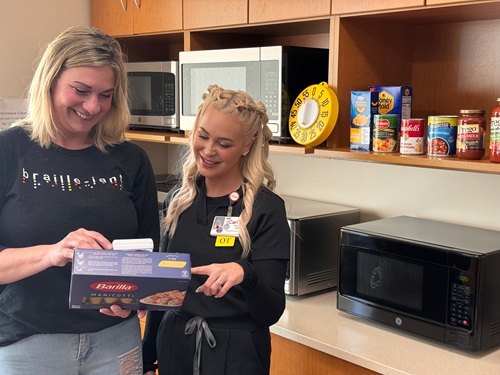
Submitted by Teresa Scott, OTD, OTR/L, CVLTTara DeBerry first noticed her vision was deteriorating when everyday activities became increasingly difficult.
Driving at night was nearly impossible, and as a schoolteacher, she found it much harder to see the classroom whiteboard.
After extensive testing, eye specialists diagnosed DeBerry with Retinis Pigmentosa – a disorder that causes light-sensitive cells in the eyes to break down slowly, resulting in low vision and progressive vision loss. “I put off addressing it for such a long time,” DeBerry said. “Once it affected my job, I knew I really needed to seek assistance.”
Specialists referred DeBerry to Occupational Therapy at Carle Foundation Hospital (CFH), where she began working with Carle Health Occupational Therapist and Certified Low Vision Therapist Teresa Scott, OTD, OTR/L, CLVT. Together, they explored a range of tools and resources, many of which were new to DeBerry.
“We used a comprehensive approach and addressed the physical, cognitive and emotional aspects of vision loss together,” Scott said.
Scott introduced DeBerry to several helpful devices including a portable, handheld Closed-Circuit Television, or CCTV, which uses a camera to magnify and enhance objects onto a monitor.
“It allows me to read my mail again – I couldn’t see print on paper anymore,” DeBerry said. “It also helps me read menus at restaurants so someone else doesn’t have to.”
Scott educated DeBerry on ways to manage glare sensitivity by exploring different types of tinted lenses that improve contrast in the environment and decrease glare on the eyes.
“We found that she managed glare better using a reddish-orange pair of sunglasses in the sun, and yellow tinted lenses to improve contrast as it became darker. That helped her tolerate different types of lighting in various environments,” Scott said.
Finally, they discussed a variety of helpful home adaptations to manage vision loss which included: incorporating large-font and high contrast or textured labels to assist with operating kitchen appliances, organizational strategies for dressing and closet arrangement, and using a personalized address stamp for writing and sending mail.
“I had none of these items before and was really struggling to teach myself and navigate on my own,” DeBerry said. “They were all miracles.”
In addition to the tools, Scott helped get DeBerry in contact with a variety of lifechanging resources. She meets with a vocational rehabilitation specialist every other week, practices reading and writing Braille twice per week, works with an orientation & mobility trainer to help with moving around, and even has specialty transportation service for long distance needs.
She is also using a special computer program that she says will only grow more helpful as her vision continues to weaken.
“At one point, I had no independence left. I couldn’t drive and was just stuck unless someone was with me,” DeBerry said. “Without Teresa, I wouldn’t have known who to contact or where to go. She was amazing – she listened, answered all my questions, explained each resource and immediately responded if I ever got stuck. She checked in on me a lot too.”
“Many patients with low vision are told nothing can be done and hesitate to seek care,” Scott said. “We want them to know there is hope - occupational therapy can help people regain independence by maximizing their remaining vision. Tara’s optimism and willingness to try new approaches helped her achieve her goals.”
DeBerry continues to do the things she loves. She frequently attends sporting events like basketball and softball games, and loves eating out with friends and family. She also runs a t-shirt printing business.
“My assistive technology team even sent an engineer to help redesign my t-shirt press so I can make designs and press shirts without issue,” DeBerry said.
DeBerry describes her experience with Scott as life-changing, encouraging anyone dealing with low vision to seek assistance.
“I should’ve done this a long time ago but was stubborn – it is absolute freedom,” DeBerry said. “Teresa is just so welcoming, understanding and amazing.”
“Low vision is a big life change, and we are here to navigate it with our patients, together.” Scott said.
To learn more about physical, occupational, and other therapy services offered throughout the Carle Health system, please visit Carle.org.
-
Submitted by Glenda Hux
This is the story of our community based practice projects. We partnered with the service learning initiative of the University of Arkansas to ensure the students got hands on experience in supporting non profits in community based practice to enhance the quality of life of international families. Read more at https://news.uark.edu/articles/75803/innovating-occupational-therapy-education-through-service-learning
-
Submitted by Vannah Javier, OT Masters Student
April is Occupational Therapy Month, so I think this is the perfect time to share why I decided to pursue occupational therapy again despite following a different career for the past six years and what inspired me to continue this journey and practice in the United States.
I graduated with a bachelor’s degree in Occupational Therapy in the Philippines in 2019. At the time, I envisioned myself working in both pediatric and adult settings or pursuing further education in the United States so I could practice my profession there. Initially, I planned to continue my studies, but a friend encouraged me to try working first at the company where she was employed. She suggested I see if I would enjoy it and consider staying long-term.
That experience helped me realize how much I truly enjoy working with and caring for adult patients with various health conditions. It made me recognize that, even after all these years, I still want to become an occupational therapist. I also discovered my passion for guiding caregivers and CNAs, helping them feel confident in providing the support and care that older adults need. Working closely with adults, their families, caregivers, CNAs, and administrators further strengthened my desire to focus on adult care.
One of my first jobs was as a companion caregiver. Although the shift was only about an hour, it was for a patient who was unable to shower independently in her bathroom. I was hired to assist her with getting into the bathroom and to ensure her safety. She lived alone and was otherwise very independent with her daily tasks. In fact, I was the first caregiver she had hired, specifically to help her with showering. On my first day, she openly shared that her goal was to find a way to shower independently again. I suggested that she can start by modifying her bathroom by removing the tub to create a walk-in shower and adding grab bars and a toilet seat to make it safer and easier for her to get in and out. Although I eventually lost my job because she no longer needed my help, I felt genuinely happy for her. She was able to regain her independence and safely shower in her own bathroom again.
That’s when I realized: this is occupational therapy in a home setting.
Watching her apply the suggestions and return to completing her daily tasks independently showed me how meaningful it is to support someone in regaining control over their own life.
-
Submitted by Sheneequa Bishop, COTA/L
I began my college journey as a business student, dreaming of opening my own cosmetology business. The healthcare field was the last thing on my mind. But in 2021, my world shifted when my nephew was diagnosed with Autism. At the same time, I was pursuing my Master’s in Business, but balancing schoolwork and caregiving for my nephew left me struggling, failing classes despite my best efforts. Feeling overwhelmed, I told my mom I was ready to drop out and devote myself entirely to helping my nephew.
Her response changed everything. “No. You are going to school for something.” I took those words to heart and began searching for ways I could truly support my nephew while staying committed to my education. That’s when occupational therapy appeared in my search results. I had never heard of OT before, but something inside me clicked. I dove in headfirst, applying to a program that would allow me to become an Occupational Therapy Assistant.
Entering the OT field has been transformative. I have witnessed firsthand how therapy can empower individuals, improve independence, and change lives. This journey has taught me the value of empathy, patience, and creative problem-solving. It has opened my eyes to the profound impact therapists have on families navigating challenges like Autism, and it has shown me the importance of advocacy and holistic care.
What started as a search for ways to help my nephew became a calling I never anticipated. OT has not only allowed me to support others meaningfully but has also given me a purpose I never knew I was looking for, one that blends compassion, action, and the power to transform lives.
-
Submitted by Dave Shyu, OTS
I want to share a story about an old lady who worked with me when I practiced mental health in Taiwan a few years ago. Her name is Susan. Susan was diagnosed with schizophrenia three decades prior and was now 60 years old. During the day, she would attend a rehabilitation center for social skills training, leisure programs, and job training. After her day sessions, she took a shuttle back home.
Susan lived in a house 5 miles from the rehabilitation center, which a charitable organization rented. She and her seven roommates also attended the rehabilitation center daily and paid the rent. Not only was she a resident of that house, but she also served as the group leader. Everyone else living with her tended to rely on her, as some needed reminders to take their medication on time, while others often neglected to change their sheets weekly or even to shower. She consistently consulted with the occupational therapist to address these issues and did her best to help her housemates maintain good hygiene and keep the home clean. She took on more responsibility than expected to create a better community.
One year later, the landlord decided to sell the house, which meant she and her roommates had to move. Fortunately, the charity rents a new residence for them, an estate nearer downtown and closer to the market and grocery store. The best part of this change is that there is a supermarket across the street from the estate, and Susan is delighted that she can go grocery shopping every day without having to wait for the bus. This estate is much bigger than their previous residence, which housed 10 residents. The only uncertainty is that she must live with another 20 individuals who do not live in the same residence.
A few days after moving in, the residents were banned from shopping at that supermarket because someone whose outfit resembled one of the residents in the estate had been caught on camera shoplifting. Besides feeling frustrated, Susan comes to me and tells me that buying different food, drinks, and snacks is crucial to her. She wants to do grocery shopping in the supermarket, which brings her a lot of joy. After realizing the meaning of shopping to her, I thought it might be a good idea to let Susan fight for her rights. After the discussion between Susan and I, we had decided that she might talk to the manager about the meaning of shopping to her and wish the manager would allow her to enter the supermarket again. Both of us thought a drill could help her prepare for the conversation, so I acted as a manager at the supermarket to help her prepare for the negotiation process over three days. We thought of three different strategies and chose two of them to be our plan of action.
Before we go to the supermarket, we call the manager to notify them of our intention, expressing our willingness to shop in a way that everyone can accept. When we see the manager, I briefly state the reason we are there, and Susan starts talking about shopping here, which is very important to them. After our conversation, the manager still has doubts about our proposal, but is willing to give Susan a chance. The supermarket manager agrees that Susan could gather shopping lists from every resident and allow her to buy groceries for all of them.
Ultimately, the grocery store manager permitted her and a few others from the estate to shop in the supermarket as a group. This experience boosted her confidence in communicating with others.
A few days later, I asked her to share her feelings about that experience. She said that she feels excited not just about buying food but also knowing she has a hand on her life by choosing what she wants.
That was the first time I realized that empowerment can take any form that clients want in a community setting, which varies from person to person. As an occupational therapist, I feel proud to help people live by their preferred lifestyle.
-
Submitted by Vivian Peng, MAOT
Being an occupational therapist has always been my dream since high school. I was drawn by how occupational therapists could help people restore their favorite activities of daily living. Seeing the delight in their eyes is the most empowering thing and is what keeps me motivated.
When I was working with an elderly stroke patient, she seemed to have no interest in anything. She used to have an active lifestyle; that is, she biked, sang karaoke with friends, and made meals for her family. However, everything changed after her onset. She lost the ability to balance on the bike, cook, or even do the simplest thing for her premorbid such as opening a lid. She was not able to do things in the way she hoped to. As a result, she did not feel confident and was reluctant to meet her friends.
However, after many OT sessions, we worked on her balance, muscle strength and endurance, fine motor skills, as well as the compensation strategies that could help her restore her favorite occupations. Although there were a lot of challenges and frustrations during the long process of rehabilitation, she eventually made it. And I couldn't forget how she smiled genuinely on the bike, sang for me, and bragged about what else she did throughout the weekend. She even started a YouTube channel for singing after a while!
As I was fascinated by the charm of occupational therapy, I was hoping this story could motivate other future occupational therapists and help patients discover the best of themselves despite any illness.