Paving a path of possibilities with Parkinson’s disease: A community-based program to address health and wellness for older adults
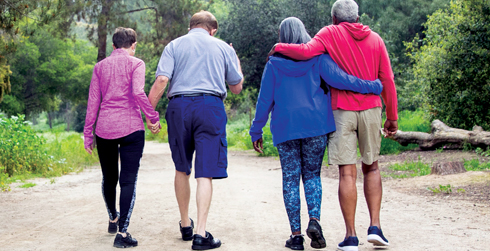
Occupational therapy students at Messiah University in Mechanicsburg, Pennsylvania, have an opportunity to participate in a course titled, Level I Fieldwork: Community Interventions. This course provides students with the opportunity to design and implement occupation-centered programs in community-based settings while developing an understanding of how psychological and social factors influence engagement in occupation. Students work with a community partner, assess the needs of the community site, and develop and implement an occupation-centered program under the guidance of a faculty member. Experiential learning activities allow students to demonstrate professional behaviors and provide further opportunities for them to practice and refine observation, communication, and interpersonal skills. One group of students collaborated with Messiah Village at Messiah Lifeways, a continuing care retirement community, to develop an occupation-based community program for independent living older adults with Parkinson’s disease (PD).
Health conditions such as heart disease, cancer, chronic bronchitis, stroke, diabetes mellitus, dementia, and PD are a few of the concerns facing older adults (Office of Disease Prevention and Health Promotion, 2020). These health conditions can lead to complications such as balance issues, increased falls, hospitalizations, and loss of independence (Substance Abuse and Mental Health Services Administration, 2016). According to Senior Living (2021), Pennsylvania is home to more than 700 independent living facilities (ILFs). ILFs are residential communities for active older adults who want an enjoyable lifestyle free from the worries and trouble of home maintenance. Older adults who are active, healthy, and do not require around-the-clock nursing care, are suitable for independent living. Individuals in the early or moderate (nonfluctuating) stages of PD often live a zestful and enriching life in an independent living environment within the broader support structure of a retirement community.
PD is characterized by a progressive decline in fine and gross motor functions with a notable decline in speed, fluidity, and coordination (Foster et al., 2014). Postural instability is a hallmark symptom of PD, leading to a high risk of falls (Foster et al., 2014). Other symptoms related to PD can be mistaken for incompetence or a disagreeable personality, often leading to negative stigmatization and health care disparities (Foster et al., 2014). Additionally, the progressive decline of gross and fine motor skills can lead to limited activity participation for those with PD and the increased need to support their participation in valued activities and roles (Foster et al., 2014).
Prior to completing the needs assessment with potential program participants, students created a community profile and a service delivery profile, and gathered information and data on the target population: older adults with PD. The first phase of the needs assessment process was a face-to-face interview with the stakeholders at Messiah Lifeways. The organization invited stakeholders based on the level of involvement that they had with the target population. Five members of the organization were involved in the initial interview with varying roles in administration, social work, enrichment, and health and wellness services. It was important to the program development process to gather key information from the stakeholders to increase the efficacy of the program. To gather the necessary information, the students developed questions to gain insight about the organization and the residents at the facility. The questions were divided into themes about the organization, the facility and resources, the residents, and the stakeholders. In this interview, the organization’s stakeholders shared that they would like the program to address stability and core strength, forming connections to the whole person, and environmental factors such as resources and home safety. Additionally, stakeholders expressed that a sustainability component would be necessary to ensure residents could continue their knowledge and education after the program has concluded.
The second phase of the needs assessment consisted of meeting with residents at Messiah Lifeways who had a diagnosis of PD or were currently caregivers of a resident with PD. There were no restrictions on caregivers' eligibility to participate; however, the caregivers who participated were family members of the current residents. The needs assessment included a focus group and surveys, interviews, and several assessment measures. First, residents filled out the Self-Assessment Parkinson’s Disease Disability Scale and the Parkinson Disease Questionnaire–39 (Biemans et al., 2001; Bushnell & Martin, 1999). After these were completed, the students conducted an occupational profile on each resident to build rapport, gain additional information on their current level of functioning, and assess which areas of occupation were most meaningful. Lastly, standardized assessments such as the 9-Hole Peg test, Timed Up and Go (TUG) test, and Functional Reach test were administered to analyze residents’ level of hand functioning, mobility, balance, and fall risk (Duncan et al., 1990; Mathiowetz et al., 1985; Podsiadlo & Richardson, 1991). The data analysis indicated fine motor skills, food and meal preparation, and functional ambulation as areas of need for the residents.
The literature review and needs assessment helped to inform the goal of this program: to improve the health and wellness for individuals with PD living in a continuing care retirement community. To achieve this goal, physical, mental, and social components were integrated into a 7-week occupation-based program.
The first week was an introduction to the PD support group program. Participants attended after seeing the advertisement for the program on the organization’s closed circuit television system. The number of participants fluctuated between three and eight residents. The goal of this session was to familiarize the residents with each other, the five OT students, and the fieldwork professor. To achieve this, various social activities were incorporated into this session to learn about each other and participants’ experiences with PD. Residents engaged in a physical activity that was focused on posture, such as seated shoulder shrugs and oblique crunches. After the physical component, residents were educated on energy conservation techniques and discussed implementing these techniques into their daily lives.
The second session was themed “Making Life Easier.” This session aimed to build on the concepts learned in session one. First, the warmup activity prepared the residents to participate in the physical component, which focused on core strengthening. Some examples of exercise include tummy twists, seated knee tucks, and Russian twists. Next, the residents were introduced to various types of adaptive equipment to address food and meal preparation. Navigating the kitchen was also highlighted to explore how environment set up can make meal preparation easier and safer. The residents then applied what they learned in this session by engaging in a meal preparation task using adaptive equipment.
The third session was themed “Stepping Up to Fall Recovery and Prevention,” which focused on carryover from the previous sessions. The warmup activity provided a light-hearted opportunity for residents to get to know each other on a broader scale in response to weekly deviations in attending members and noted expressed desires to continue intermember communication. The physical component focused on posture, strength, and endurance. Examples of targeted exercises included pursed lip breathing, sit-to-stands, and rotating toe touches. The residents were then educated on fall prevention and recovery and simulated how to safely get up from a fall. Additionally, residents teamed up in pairs and worked on coaching each other through the steps of fall recovery. At the end of the session, participants engaged in a social hour to continue building rapport.
The fourth session was themed “Tourist in Your Own Town.” The physical component carried over from the previous session and focused on increasing strength, endurance, balance, and posture. The physical component repeated many of the previous week's exercises to engage muscle groups and included a reaching and stretching routine set to imagery for an increased retention rate. The residents were educated on safe traveling techniques as both a driver and a passenger, including various tourist destinations in their own town. For the social component, the residents were asked to bring an item from home that represented a meaningful memory and to describe it for the group. The goal was to promote social participation and further establish connections.
The fifth session was themed “Caregiver Education.” For this week’s physical component, the residents participated in mini golf to work on balance, strength, endurance, and posture. The residents were educated on the importance of self-care, mental health for caregivers, and ways to reduce caregiver burden. Throughout this session, residents expressed their hesitation in asking for help due to feeling like a burden to others. To address these concerns, the students educated the residents on the importance of advocating for themselves and asking for help when needed it, to ensure safety and increase their confidence in performing everyday tasks. The residents and caregivers discussed their own experiences and shared ways they could care for themselves while caring for others.
The sixth session was themed “Fall Fest.” The physical component carried over from the previous session with a focus on various client factors through an occupation-based activity of walking outside to participate in a prepared scavenger hunt. The residents were educated on how to prepare for the changing seasons and focused on maintaining overall safety and preparation for the winter months. Advice included medication management, wardrobe management (e.g., having good traction shoes), and advocating for self-care. To address fine motor skills and social participation, residents decorated pumpkins with different materials. During this time, residents shared favorite activities they had participated in.
During the last session, residents participated in a modified Jeopardy game to review the materials from the previous weeks. Each group participant received a binder with all the materials used throughout the group programming for reference during the activity and to help support program sustainability.
Outcomes
Students conducted weekly evaluations of outcomes through informal measures, such as large- and small-group discussions. Discussions centered on how residents applied the information from the previous session into their daily routines, and key questions were asked weekly to assess carryover and generalization of education and training. Handouts on weekly education components and physical exercises were provided as reminders and visual references.
Standardized assessments were used to obtain objective quantitative data to assess health outcomes related to PD symptoms. Therefore, success was defined by improved scores in the post-test standardized assessments. The 9-Hole Peg test measured the residents’ finger dexterity. One resident’s post-test score was 3.25 seconds less than on the pre-test, while another resident’s post-test score was 6.85 seconds less than on the pre-test. These scores indicate improvements in tasks that require finger dexterity, despite tremors associated with PD. The functional reach assessment and TUG measured balance, mobility, and risk of falls. The functional reach post-test scores improved by 2 to 3 inches, and there were minor improvements in the post-test scores of the TUG. On the last day of the program, the residents completed a program satisfaction survey. Many residents reported their health was good before and after the program implementation, but noted experiencing improvements from their initial baseline, indicating progress toward the program’s target objectives. Additionally, individuals who attended six or seven sessions suggested that the program was beneficial to their physical, mental, and social well-being.
Conclusion
There is a significant need for occupation-based programming for members of the independent living older adult population who have been diagnosed with PD. Although evidence often cites research exploring occupational therapy intervention in the later stage of PD, there is a unique opportunity for OT to partner with the well elderly population who also have a diagnosis of PD to increase occupational performance and quality of life, and to facilitate zestful living while continuing to live in the community or an independent living facility.
References
Biemans, M. A., Dekker, J., & van der Woude, L. H. (2001). The internal consistency and validity of the self-assessment Parkinson’s Disease Disability Scale. Clinical Rehabilitation, 15(2), 221–228. https://doi-org.ezproxy.messiah.edu/10.1191/026921501667641185
Bushnell, D. M., & Martin, M. L. (1999). Quality of life and Parkinson’s disease: Translation and validation of the U.S. Parkinson’s Disease Questionnaire (PDQ-39). Quality of Life Research, 8, 345–350. https://doi.org/10.1023/A:1008979705027
Duncan, P. W., Weiner, D. K., Chandler, J., & Studenski, S. (1990). Functional reach: A new clinical measure of balance. Journal of Gerontology, 45(6), M192–M197. https://doi.org/10.1093/geronj/45.6.m192
Foster, E. R., Bedekar, M., & Tickle-Degnen, L. (2014). Systematic review of the effectiveness of occupational therapy-related interventions for people with Parkinson’s disease. American Journal of Occupational Therapy, 68(1), 39–45. https://doi.org/10.5014/ajot.2014.008706
Mathiowetz, V., Weber, K., Kashman, N., & Volland, G. (1985). Adult norms for the 9-Hole Peg Test of Finger Dexterity. Occupational Therapy Journal of Research, 5(1), 24–38. https://doi.org/10.1177/153944928500500102
Office of Disease Prevention and Health Promotion. (2020). Older adults. https://www.healthypeople.gov/2020/topics-objectives/topic/older-adults
Podsiadlo, D., & Richardson, S. (1991). The Timed Up & Go: A test of basic functional mobility for frail elderly persons. Journal of the American Geriatrics Society, 39(2), 142–148. https://doi.org/10.1111/j.1532-5415.1991.tb01616.x
SeniorLiving.org (2021, March 4). Pennsylvania senior living statistics & facts. https://www.seniorliving.org/pennsylvania/Krystal
Robinson-Bert, OTD, CSRS, C/NDT, CAPS, OTR/L, is an Assistant Professor in the Graduate Program of Occupational Therapy at Messiah University. She is a Certified Stroke Rehabilitation Specialist and Aging in Place Specialist, and practices at Helen M. Simpson Rehabilitation Hospital specializing in neurorehabilitation.
Drew Keagy, Sidra Khan, Elena Mingora, Christine Porcaro, and Erin Remington are all occupational therapy students at Messiah University in Mechanicsburg, PA.
All program materials, including session outlines and activities, are available. Please email krobinson@messiah.edu for access.