Smarter, Not Harder: How AI Tools Can Transform Your Student Success
Let’s face it, being an occupational therapy (OT) or occupational therapy assistant (OTA) student is hard. Between studying for exams, managing fieldwork, understanding clinical reasoning, making a good impression, and balancing life outside of school, there’s hardly time to breathe (ugh). If you’ve ever wished you had another version of yourself to help juggle your daily responsibilities, you’re not alone. While cloning yourself is not an option yet, artificial intelligence (AI) might support us in this endeavor.
In a profession grounded in human connection, empathy, and clinical judgment and reasoning, the idea of integrating AI into practice might seem surprising or even intimidating. Yet, the truth is, AI is not here to replace us, but to act as an associate. In fact, when considering the risk of our jobs becoming automated, OT only has an average score of 10%, and OTA has an average score of 13%, both equivalent to minimal risk, based on calculated and polling information (Will Robots Take My Job? 2025a, 2025b). AI is here to enhance what we do, and as future practitioners, it’s crucial for us to not only understand AI, but to know how to use it ethically and effectively so we can stay up to date with our evolving profession. Karen Jacobs, OTD, EdD, OTR, CPE, FAOTA, an Advisor for an AI company and Associate Dean of Digital Learning and Innovation at Boston University, says, “It doesn't replace the occupational therapy practitioner but enriches what we are doing and works alongside us” (Jacobs et al., 2024).
AI’s Importance in OT and in Health Care
AI is already making a noticeable impact in many healthcare disciplines. In occupational therapy, it can support better decision-making, streamline workflow, personalize patient care, and more. For students, this technology can act as a learning tool, assistant, and idea generator all at once. For instance, AI reviewed this article, providing grammar suggestions, alternative word choices, and title options.
AI is shaping the future of health care, and occupational therapy must be part of this conversation. As students, we’re the next generation of leaders in this profession (we know, a little bit of pressure). Developing comfort and competence with AI will only position us to be a part of numerous conversations, such as advocating for better tools, shaping ethical policies, and creating innovative models of care that keep occupational therapy relevant and powerful in this rapidly evolving landscape.
Benefits of Using AI in OT Education
When utilized effectively, AI can transform the learning experience of OT and OTA students by personalizing education, enhancing task efficiency, stimulating creativity, and streamlining administrative tasks (Mansour, 2024). Some AI tools can generate rich multimedia content, such as podcasts and mind maps; create visually engaging materials; create clinical simulation and scenarios; and simplify repetitive tasks like data analysis and information retrieval. These capabilities can provide students with different ways of learning to enhance comprehension.
Moreover, AI offers powerful tools for professional development in clinical practice. These tools can assist with intervention planning, analyze research articles, and draft professional clinical notes. For instance, by utilizing open-source AI platforms, occupational therapy professionals can significantly increase their efficiency in accessing medical-related, evidence-based resources, streamlining their research processes, and saving time (Lyon et al, 2025). Furthermore, certain AI platforms can be used to promote active learning by helping students break down questions, offering constructive feedback, generating study quizzes, correcting grammar, and clarifying complicated content.
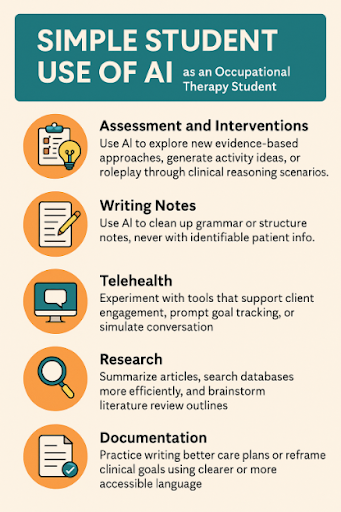
Figure 1. AI Potential Benefits (OpenAI, 2023)
Potential Drawbacks of AI in OT Education
Integrating AI into occupational therapy education should be viewed as a complementary tool to enhance clinical judgment and decision-making while keeping privacy and ethical considerations at the forefront (College of Occupational Therapists of Ontario, n.d.). Potential drawbacks of students using AI include over-reliance, personal information leaks, misinformation due to hallucinations if there isn’t much research or content about the topic available, inaccurate references, and challenges to academic integrity.
It is noteworthy that there are limitations in AI in providing unbiased, sufficient, and holistic answers. For instance, they may lack a nuanced understanding of human living, leading to lack of considerations (Gadkari, 2023; Thomure, 2024). Additionally, AI use is taxing on the environment, which is a major deficit to all, especially those of vulnerable populations. AI is a large energy consumer; relies on fossil fuel usage; requires a lot of water to cool data centers; and produces electronic waste such as hardware, hazardous materials, and inefficient recycling (Daws, 2025). Ultimately, students should thoughtfully apply a balanced approach of using AI tools to maximize the benefits (see Figure 1) while staying aware of its challenges.
Conclusion
Occupational therapy’s cornerstone is supporting individuals in living meaningful lives, and that includes embracing innovation when it aligns with our core values. By learning how to use AI responsibly, OT and OTA students are preparing to enter the workforce as knowledgeable, adaptable, and technologically competent professionals. The truth is, we don’t need to fear AI; we need to understand it, guide it, and use it to make our personal lives and the lives of our clients better. We may not be able to clone ourselves, but with AI, you can get pretty close to having the support of a second or third brain as an OT or OTA student or practitioner.
References
College of Occupational Therapists of Ontario. (n.d.). What should occupational therapists consider if using artificial intelligence (AI) in practice? https://www.coto.org/resources/what-should-occupational-therapists-consider-if-using-artificial-intelligence-ai-in-practice/
Daws, R. (2025, May 23). Will the AI boom fuel a global energy crisis? AI News. https://www.artificialintelligence-news.com/news/will-the-ai-boom-fuel-a-global-energy-crisis/
Gadkari, S. (2023, July 1). The advent of artificial intelligence: OT and ChatGPT. OT Practice, 28(7), 14–18. https://www.aota.org/publications/ot-practice/ot-practice-issues/2023/the-advent-of-artificial-intelligence
Jacobs, K., Stover, A., & Cleary, D. (2024, July 25). Artificial intelligence and occupational therapy—What we can learn from each other [Podcast]. https://www.occupationaltherapy.com/articles/artificial-intelligence-and-occupational-therapy-5724
Lyon, S., Lee, C., & Linic, A. (2025). AI and treatment planning [Podcast episode]. OT Potential. https://otpotential.com/ceu-podcast-courses/ai-and-treatment-planning
Mansour, T. (2024, October 2). Artificial intelligence in health professions education [Conference presentation]. Academic Leadership Council, American Occupational Therapy Association. https://www.aota.org/-/media/corporate/files/educationcareers/alc-2024-fall/alc-powerpoint-mansour-generative-ai.pdf
OpenAI. (2023). ChatGPT (Mar 14 version) [Large language model]. https://chat.openai.com/chat
Thomure, R. (2024, August 1). The current state of AI: Its role in treatment planning. OT Practice, 29(8), 25–27. https://www.aota.org/publications/ot-practice/ot-practice-issues/2024/the-current-state-of-ai-its-role-in-treatment-planning
Will Robots Take My Job? (2025a). Will occupational therapists be replaced by AI & robots? https://willrobotstakemyjob.com/occupational-therapists
Will Robots Take My Job? (2025b). Will occupational therapy assistants be replaced by AI & robots? https://willrobotstakemyjob.com/occupational-therapy-assistants
Elva Lin is a second-year student at Washington University in St. Louis School of Medicine’s OT Program. She is passionate about advancing OT practice through technology. She is also dedicated to specializing in hand therapy while continuing to promote societal equity and the influence of OT in health care.
Tyler Hood is a third-year student at Washington University in St. Louis School of Medicine’s OT Program. He is service-driven and passionate about teaching, learning, innovation, and making a positive change in OT practice. He hopes to work in an outpatient setting while continuing to promote positive change in OT to improve the profession’s prominence.