AOTA joins Department of Labor policy forum to discuss how to best enable workers to return to work after an accident or illness
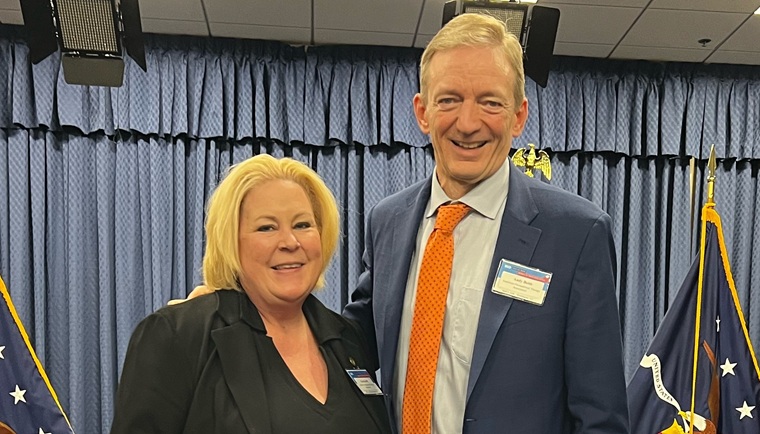
AOTA member Lisa Krefft, MSL, OTR-L, OHP, VP Global Enterprise Solutions, Simple Therapy, attended the Department of Labor’s (DoL) Stay-at-Work/Return-to-Work (SAW-RTW) Policy Forum on April 7 as an invited participant along with AOTA staff member Andy Bopp. The Forum featured panel presentations by state legislators and elected officials who reviewed successes and challenges in advancing SAW/RTW polices. Discussions also focused on lessons learned from the DoL’s Retaining Employment and Talent After Injury/Illness Network (RETAIN) initiative.
Keith Sonderling, Deputy Secretary, U.S. DoL, emphasized that 1:4 people are living with disabilities and that as the US celebrates its 250th anniversary, it is fitting to reflect on the American belief in the dignity of work, emphasizing a need for prevention and mental health services to support a robust workforce. He summarized the Administration’s emphasis on increasing the number of workers who can stay at or return to work after a serious injury or illness rather than leaving the workforce and suffering the human and economic impacts which have direct costs for employers, insurers, and government benefits and indirect costs that impact states, the nation and society as a whole. He noted that this would be beneficial for employers, workers and their families.
Thomas Martin, a worker who benefitted from the Kansas RETAIN program addressed the forum and noted that he was otherwise likely headed towards permanent disability status when an emergent heart condition rendered him unable to retain his existing job and support his family. The RETAIN program retrained him, started him on a path to a new career and restored his dignity to provide for his family and contribute to society.
During breakout sessions, Krefft and Bopp emphasized the important role that occupational therapy plays in enabling workers to maximize their SAW/RTW potential by proactively engaging with employers to address physical, psychosocial, and environmental barriers to employees’ SAW-RTW. Mental health diagnoses are the number one disability diagnosis, and Krefft and Bopp both noted the important role that occupational therapy practitioners (OTPs) play in addressing mental along with physical, environmental and ergonomic challenges to remaining in the workplace.
Forum attendees were generally well aware of the benefits that OTPs can provide for injured or ill workers to aid in prevention, early intervention and SAW-RTW, and many expressed how important OT services can be in making the adaptations necessary to enable a worker to stay at work or transition a recently injured or ill employee back to work. Krefft noted that “with 1 in 4 individuals living with a visible or invisible disability, the need for inclusive, effective workplace support has never been greater. Occupational therapists are uniquely equipped to deliver prevention, Stay-at-Work, and Return-to-Work programs through a holistic, function-focused approach.”
Krefft added that “OTPs specialize in addressing a wide range of needs, including developmental disabilities, cognitive barriers, hearing and vision impairments, and mental health conditions such as anxiety, depression, and PTSD, as well as complex diagnoses like cancer, stroke, and Parkinson’s disease. By considering the full picture, physical, cognitive, psychosocial, and environmental factors, they bridge the gap between health and workplace performance. This comprehensive expertise allows occupational therapists to support both the individual and the employer, creating practical solutions that enable safe, sustainable participation in work.”
Krefft emphasized that “prevention, Stay-at-Work and Return-to-Work programs are designed to help employees remain productive or safely transition back to work following injury, illness, or other challenges. Delivered by occupational therapy practitioners (OTPs), these services are available both on-site and virtually, offering flexible support that meets employees where they are.”
OTPs work collaboratively with employees and employers to promote compliance with work restrictions and ensure a safe, supportive work environment. They assess and address barriers to success by recommending practical environmental accommodations, ergonomic adjustments, and psychosocial supports.
Krefft added that “with specialized training, OTPs take a comprehensive approach, considering physical, cognitive, emotional, and workplace factors, to support sustainable work participation. By aligning the needs of both the employee and organization, SAW and RTW programs create positive return on investment (ROI) by reducing risk, improving outcomes, and fostering a healthier, more productive workforce.”
Panelists and break out groups agreed that government should create incentives for companies to make the adaptations necessary to enable their workers to remain at or return to work.
AOTA will engage with the DoL in the coming months as it focuses on programs such as RETAIN to ensure that workers who might otherwise exit the workforce have access to OT solutions that can help them to successfully maintain all of the benefits that flow from being gainfully employed.